
Why Healthcare Platforms Need Embedded Payments Now

Top takeaways
Embedded payments keep patients inside the platform, reducing drop-off and payment friction. A more transparent payment experience can strengthen trust and improve collections.
Healthcare platforms can create more strategic value for providers when payments are integrated into core workflows.
The right payments partner should support healthcare complexity, security, flexibility, and growth.
For healthcare platforms, payments are no longer a back-office detail. They are part of the product experience.
Patients expect the same clarity and convenience from healthcare payments that they get from nearly every other digital interaction. Providers want faster collections, fewer manual steps, and less friction across the revenue cycle. When a platform still sends users to disconnected billing systems, confusing statements, or clunky third-party portals, everyone feels the drag.
That is why healthcare embedded payments matter now.
In simple terms, embedded payments let users complete a payment inside the software they already use, rather than leaving the experience to pay somewhere else. In healthcare, that can mean a patient seeing a balance in a portal, reviewing available payment options, and paying immediately—without redirects, duplicate logins, or uncertainty about what happens next. For platforms that want to go further, embedded finance can also support options like installment plans and other financial experiences inside the same workflow.
The result is a payment experience that feels less like an afterthought and more like part of care delivery.
Why legacy payment experiences hold healthcare platforms back
Healthcare billing is complex enough without adding unnecessary friction. Patients often juggle deductibles, copays, insurance adjustments, payment plans, and multiple communications from different systems. Providers and platform teams, meanwhile, are left managing reconciliation issues, support calls, delayed payments, and disconnected workflows.
When payments live outside the core platform experience, the problems multiply:
Patients are forced to leave the portal to complete a transaction
Branding changes and extra logins create doubt and drop-off
Billing details feel harder to understand and harder to trust
Staff spend more time answering payment questions and tracking down issues
Providers wait longer to collect what they are owed
That disconnect is especially risky in healthcare, where the financial experience directly shapes how patients feel about the organization as a whole. A frustrating bill-pay journey can overshadow an otherwise strong clinical experience.
Healthcare organizations that want a more modern approach are already investing in better healthcare payment processing and more streamlined digital workflows. Platforms that support them need to keep pace.
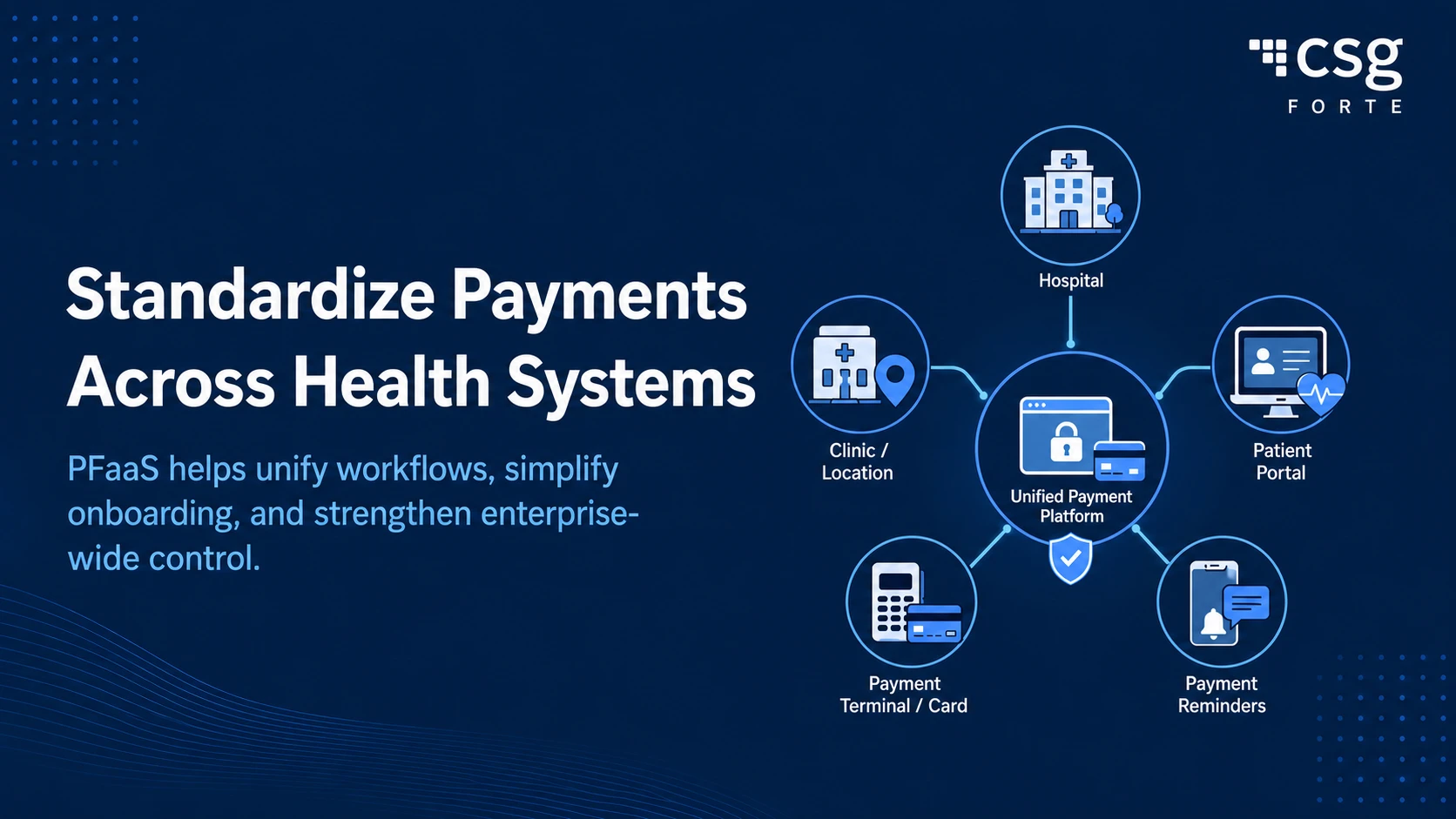
What embedded payments look like in healthcare
Embedded payments in healthcare are not just a checkout box added to a portal. Done well, they reduce friction across the full payment journey.
That can include:
Showing balances inside the patient or provider-facing platform
Presenting clear payment options at the moment a decision is needed
Supporting cards, ACH, wallets, and other preferred methods
Enabling autopay or stored credentials for repeat transactions
Offering payment plans or financing options within the same flow
Giving staff and administrators better visibility into transaction status and reporting
The key is that the payment experience feels native to the platform—not bolted on.
This matters for more than convenience. It also creates better continuity between patient engagement, billing, and collections. As Forte has covered in its guidance on online payments processing for healthcare providers, digital payment experiences can improve both operational efficiency and patient satisfaction when they reduce confusion and make it easier to act.
Four reasons healthcare platforms cannot afford to wait
1. Payment friction slows collections
Every extra click, redirect, and login creates another chance for a patient to delay payment. Embedded payments remove unnecessary steps and make it easier to collect at the moment of intent.
When patients can view a balance and pay inside the same environment they already trust, they are more likely to complete the transaction. That helps providers accelerate cash flow and reduce the downstream burden of reminders, collections activity, and write-offs.
For healthcare platforms, that is not just a UX win. It is a measurable business outcome for customers.
2. Transparency builds trust
Healthcare billing is stressful partly because it often feels unclear. Patients want to know what they owe, why they owe it, and what their options are.
Embedded payments help platforms deliver a more transparent experience by keeping pricing context, balance details, and payment choices in one place. That is especially valuable when combined with digital estimates, payment plans, and clear post-visit workflows.
A better financial experience does not eliminate the complexity of healthcare billing—but it can make that complexity easier to navigate. Forte’s perspective on healthcare payment solutions that improve patient satisfaction and collections reinforces the same point: convenience and clarity are closely tied to whether patients follow through.
3. Embedded payments reduce operational drag
Manual payment follow-up creates work across support, billing, finance, and operations teams. Staff end up answering avoidable questions, resolving mismatched records, and helping users complete tasks that should have been simple in the first place.
Embedded payments help reduce that drag by giving platforms a more consistent, integrated payment workflow. That means fewer handoffs, cleaner reporting, and a better foundation for automation.
For healthcare platforms serving provider groups, RCM organizations, or patient engagement use cases, that operational lift can become a competitive differentiator.
4. Platforms need stronger, stickier value propositions
Healthcare organizations are evaluating software partners based on more than feature lists. They want platforms that simplify workflows, improve the patient experience, and support healthier financial outcomes.
Embedded payments help platforms move closer to the center of those outcomes.
Instead of acting as a system of record that hands payments off elsewhere, the platform becomes the place where billing visibility, payment action, and customer experience come together. That increases platform value, deepens customer reliance, and opens the door to more strategic revenue opportunities.
That is one reason the conversation around making healthcare payments a strategic advantage is gaining traction. Payments are no longer just something software has to support. They are part of how software proves its value.
What healthcare platforms should look for in a payments partner
Not every embedded payments approach is built for healthcare complexity. Platforms should look for a partner that can support both the user experience and the operational realities behind it.
Priority areas include:
Flexible integration options that fit existing platform architecture
Support for multiple payment methods and workflows
Strong security and compliance posture
Clear reporting and reconciliation capabilities
Room to grow into more advanced models over time
For some organizations, that also means understanding how registered payment facilitators modernize patient payments and revenue cycles. The right model depends on how much control, responsibility, and monetization opportunity a platform wants to take on.
The important point is this: healthcare platforms should not treat payments as a one-size-fits-all utility. They should treat them as part of the product strategy.
The bottom line
Healthcare platforms cannot afford to let payments remain fragmented, opaque, or disconnected from the core user experience.
Embedded payments help reduce friction, improve trust, support faster collections, and strengthen the value a platform delivers to providers and patients alike. In a market where digital expectations keep rising, that is not a nice-to-have. It is a competitive necessity.
CSG Forte helps organizations build payment experiences that feel modern, connected, and easier to manage. For healthcare platforms that want to improve the payment journey without adding unnecessary complexity, embedded payments are a smart place to start.
FAQ
What are embedded payments in healthcare?
Embedded payments in healthcare allow patients or staff to complete transactions inside the platform they are already using, such as a patient portal or healthcare software application, instead of being redirected to a separate payment site.
Why do embedded payments matter for healthcare platforms?
They matter because they reduce payment friction, improve patient trust, support faster collections, and make the platform more valuable to healthcare organizations trying to modernize billing and financial workflows.
How are embedded payments different from embedded finance?
Embedded payments focus specifically on completing transactions inside a platform. Embedded finance is broader and can include additional financial services, such as payment plans or financing options, within that same experience.